
This is a 31-plot, JDA-approved farmhouse township on a highway corridor near Jaipur. It's a different asset class from the furnished-suite project we've covered before on this blog — here's an honest look at what it is, what the location and low plot count have going for them, and what to weigh before treating it as an investment rather than just a weekend retreat. Fill out our form for the project name, exact location and current pricing.
The Project, Briefly
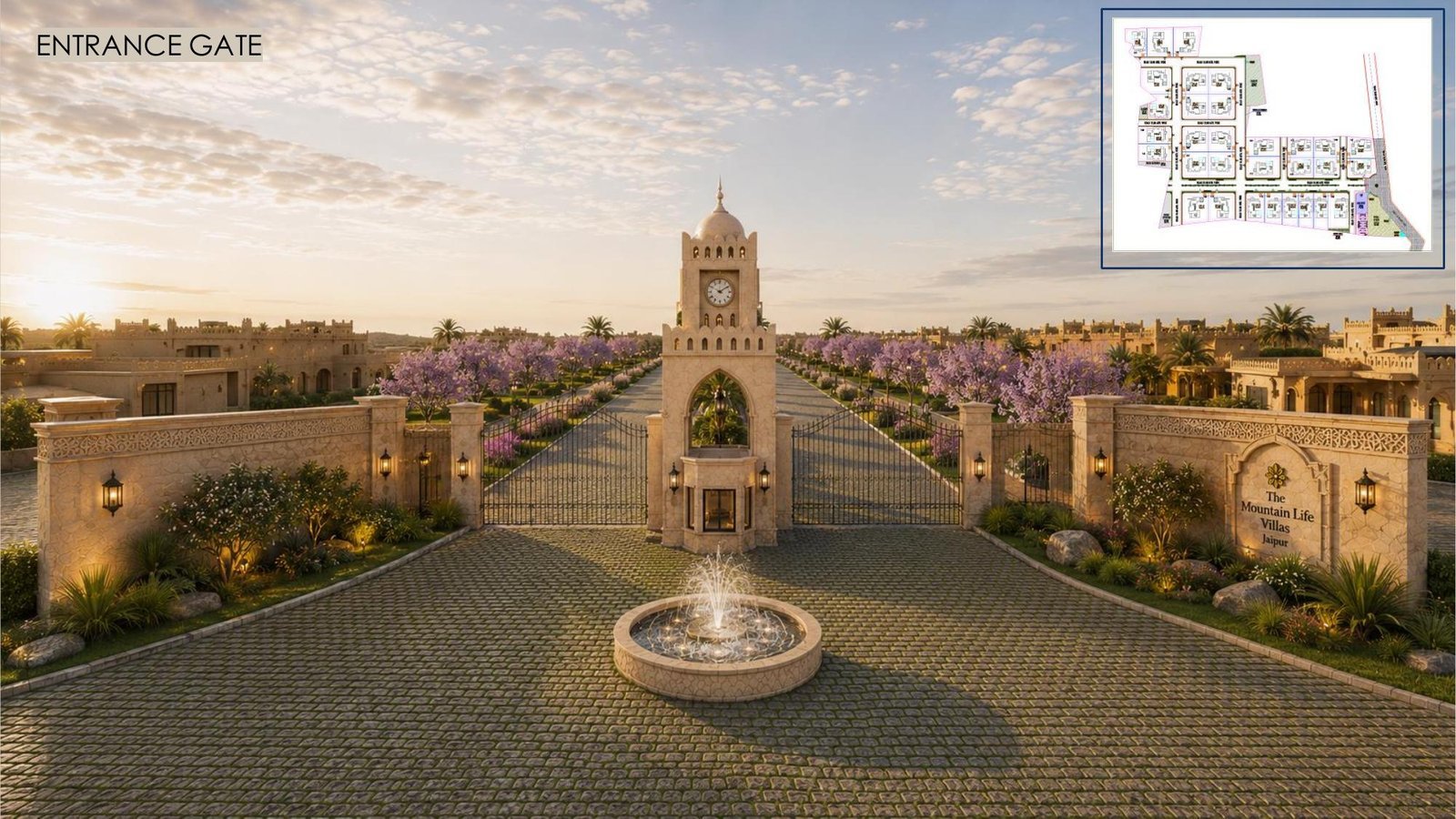
This township is positioned around scarcity and full upfront infrastructure rather than a large, phased plotted colony. Just 31 farm plots are laid out across roughly 36 bigha, with a minimum plot size of 1,800 sq.yd. — noticeably larger and fewer in number than a typical residential plotting scheme. The project carries a JDA-approved layout and is marketed as RERA-registered; we share the developer name and registration details directly with genuine enquiries.
Want the project name, exact location and current pricing?
Our team can share the full brochure, plot-number map, current availability and the exact payment schedule.
Location: What This Corridor Offers
We've written before about why Jaipur's growth corridors are worth watching — this site is a different kind of bet inside that same broader story. It sits on a well-connected highway corridor on the outskirts of Jaipur, within reasonable driving distance of the airport and established residential areas. Three location factors matter here:
- Highway frontage, not an interior pocket. Sitting directly on a major highway means the site has an established, high-visibility connectivity corridor rather than depending on a single feeder road — relevant both for access convenience and for future commercial spillover along the highway.
- Genuinely open, nature-surrounded land. Unlike inner-city plotting, this is a farmhouse-format location — the value proposition here is space and landscape, not walkable urban infrastructure. That's a different buyer profile than a rental-focused apartment purchase.
- Institutional and industrial anchors nearby. A cricket stadium and an industrial park hosting several large projects sit close to the site, giving the belt some non-speculative economic activity beyond raw land appreciation.
The Low-Density Farmhouse Model
This is worth understanding on its own terms, separate from any specific project. A 31-plot, 36-bigha township with a minimum 1,800 sq.yd. plot size is structurally different from a dense residential plotting scheme, and the case for this format rests on a few practical points:
- Scarcity by design. Capping a township at 31 plots is a deliberate low-density choice — fewer neighbours, more open land per owner, and (in theory) less dilution of any exclusivity premium than an open-ended phased launch. Whether that premium holds up in resale depends on actual demand at the time, not the plot count alone.
- Infrastructure built upfront, not promised for later. Tubewells, an overhead water tank, underground electrification and interlock roads being laid out at this stage — rather than deferred to a "future phase" — reduces (but doesn't eliminate) the execution risk that's common with large plotted developments.
- A lifestyle-first, not rental-first, asset. Unlike the furnished-suite project we've reviewed separately, a farmhouse plot's income potential (if any) would typically come from personal use, appreciation, or a bespoke build — not a straightforward rental yield calculation.
Plot Economics — What To Ask Before You Commit
Beyond the base pre-booking rate, expect a farmhouse township like this to carry two categories of additional cost: standard charges that apply to every plot (typically a clubhouse membership fee and a JDA corpus fund, both usually quoted per sq.yd.), and location-specific PLCs for corner plots or plots facing a wider internal road. We intentionally don't publish the current rate card here — on a low-inventory, 31-plot township, pricing moves as plots get booked, and a number that's accurate today can be stale within weeks.
What we can do instead: share your target plot size and budget with our team, and we'll walk you through the current base rate, every applicable charge, and a worked-out total — so you're comparing real numbers, not a snapshot that may already be outdated.
What To Verify Before You Commit
The same checklist applies here as to any Jaipur property — see our full buyer's legal checklist for the detailed version. The project-specific starting points:
- Confirm the RERA registration and the JDA-approved layout number directly at rera.rajasthan.gov.in and with the JDA yourself, rather than relying on brochure copy or a verbal confirmation.
- Ask for the specific plot number, its exact dimensions and its position on the approved layout in writing — sizes and PLC eligibility (corner, 80 ft. road) should be confirmed against the sanctioned plan, not just a sales pitch.
- Get the "5 years' maintenance handled by the builder" commitment, and what happens after that period, in writing as part of your agreement.
- If you intend to build, confirm what construction guidelines or design mandates (if any) apply within the township, since gated farmhouse schemes sometimes carry architectural restrictions.
Future Outlook
Zooming out: this project sits on a highway corridor that benefits from the same broader Jaipur growth narrative we've covered elsewhere on this blog — a market where global liveability recognition and infrastructure investment are both pointing the same direction, even if a highway-adjacent farmhouse belt is a slower-moving story than an in-city micro-market. A low-density, amenity-first township with genuine highway frontage is a reasonable way to try to participate in that story for buyers specifically looking for a farmhouse-format asset — but "reasonable" is not the same as "guaranteed," and land on the city's edge carries its own risks (slower liquidity, longer appreciation timelines, and dependence on continued infrastructure follow-through) that no brochure, article or advisor can fully remove. Treat this analysis as a starting point for your own due diligence, not a substitute for it.
Considering this property?
We'll walk you through current pricing, plot availability and a side-by-side comparison with similar options.